Physical Address
304 North Cardinal St.
Dorchester Center, MA 02124
Physical Address
304 North Cardinal St.
Dorchester Center, MA 02124
Imagine this for a moment.
You’re in your mid-50s. Climbing stairs feels a little harder than before. You pause midway, catch your breath, and tell yourself, “Maybe I’m just getting older.” Days turn into months. Months turn into years. The tiredness stays. The breathlessness slowly grows. But it never feels urgent enough to verify
Such discomfort is how it often begins.
A condition called aortic stenosis can quietly develop over many years. It affects one of the heart’s valves, slowly making it harder for blood to flow out of your heart. The tricky part? Your body adjusts for a long time. So the signs are easy to ignore.
Here’s the real concern: by the time symptoms feel serious, the problem has already been there for years.
In this guide, you’ll learn how to notice the early warning signs, understand what’s really happening inside your heart, and know when to take action.
Because sometimes, your body doesn’t shout.
It whispers first.
To understand this condition, think of your heart like a pump with doors.
One of these doors is called the aortic valve. Its job is simple. It opens to let blood flow out of your heart to the rest of your body, and then it closes to keep blood from flowing backward.
In aortic stenosis, this valve slowly becomes narrow and stiff. This condition can happen because of calcium build-up with age, a valve you were born with, or past illness like rheumatic fever. Over time, the valve does not open fully.
Now imagine trying to push water through a thin straw instead of a wide pipe. It takes more effort, and less water is pushed through.
Your heart faces the same problem. It has to pump harder to push blood through the narrow valve. To manage the situation, the heart muscle becomes thicker. For a while, this adjustment helps. You may feel nothing unusual.
But the delay is also why symptoms come late.
As the heart keeps working harder, it slowly reaches a point where it cannot keep up anymore. That’s when signs like breathlessness or tiredness begin to show.
In the early stage, aortic stenosis does not feel like a serious heart problem.
It often feels like small, everyday issues. That’s why many people ignore the signs or blame something else.
Here are some of the early signals your body may be giving you:
You may think you are just out of shape or getting older. But if simple activity leaves you short of breath, your heart may be struggling to push enough blood.
This can feel like mild pain or pressure. Many people mistake it for gas, acidity, or muscle strain.
Even after rest, you may feel low on energy. This is often blamed on stress, poor sleep, or low iron levels.
Especially when you stand up quickly or exert yourself. It may seem like low blood pressure or dehydration.
Some people feel their heart beating fast or uneven. This is often thought to be anxiety.
This can be ignored as a result of sitting too long or standing for hours.
One important thing to know: the well-known signs like chest pain, fainting, and severe breathlessness usually appear later. In the early stage, the signs are much more subtle.
Also, the change can be quick. You may feel “mostly fine” for a long time and then suddenly notice that daily tasks are becoming harder.
Listening to these small changes can make a big difference.
Aortic stenosis does not stay the same. It slowly moves from mild to moderate and then to severe. The change may feel small at first, but over time, the impact becomes serious.
So how do you know it is getting worse?
Watch for these changes in your body:
Earlier, you may have felt short of breath only while walking or climbing stairs. Now, even sitting or lying down may feel uncomfortable.
Pain or tightness may come even during simple tasks or sometimes at night.
Feeling like you may pass out, or actually fainting, is a strong warning sign. This needs quick medical attention.
Activities you could do easily a few months ago now leave you exhausted.
Even after taking a break, the relief does not last long.
A common question many people have is, “Can this condition suddenly become serious?”
The answer is yes.
For a long time, the body adjusts and hides the problem. But once clear symptoms begin, the condition can worsen faster than expected. This is why timely action is so important.
Knowing these signs is not meant to scare you. It is meant to help you act early and stay safe.
This is one of the most common questions people ask.
Can this condition be reversed without surgery?
The honest answer is no.
Once the aortic valve becomes narrow and stiff, it cannot return to normal on its own. Medicines cannot open the valve again.
But that does not mean nothing can be done.
Medicines still play an important role. They can help control blood pressure, reduce fluid build-up, and manage heart rhythm. In early stages, they may also help slow down the condition and keep you stable for longer.
However, to fix the main problem, the valve needs to be treated directly.
This is done through valve replacement. There are two main options:
A traditional surgery where the damaged valve is replaced with a new one.
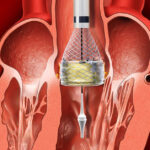
A less invasive method where a new valve is placed using a tube, without open surgery. This is helpful for many patients, especially older adults or those with higher risk.
Along with treatment, simple lifestyle steps can also help. Eating healthy, stopping smoking, and keeping blood pressure under control can support your heart.
The key message is this:
You may not be able to reverse it, but you can treat it effectively—especially when it is found early.
Many people think they should see a doctor only when symptoms become strong.
But with aortic stenosis, waiting can delay the right care.
Often, the first clue is found during a simple check-up. A doctor may hear an unusual sound in your heartbeat, called a murmur, using a stethoscope. Such issues can appear even before you notice any symptoms.
To confirm the condition, doctors use a few simple tests:
This is the most important test. It uses sound waves to show how your heart and valve are working. It helps measure how narrow the valve is and how well your heart is pumping.
This test checks the heart’s rhythm and shows if the heart muscle is under stress.
It can show if the heart is enlarged or if there are signs of calcium in the valve.
This test helps doctors see how your heart responds during activity and if symptoms appear with effort.
This procedure gives a clear picture of the valve and is often used when planning treatments like TAVI.
One important thing to remember: many people are diagnosed only after symptoms become hard to ignore. By that time, the condition may already be advanced.
A simple yearly heart check-up, especially after the age of 50, can help find the problem much earlier.
Your heart often gives quiet signals first. Regular check-ups help catch them before they turn serious.
Aortic stenosis is a serious condition. But the good news is it can be treated well when found at the right time.
The biggest mistake many people make is waiting.
They ignore early signs. They delay check-ups. They hope the problem will go away on its own.
Instead, here are three simple steps you can take:
Breathlessness, chest discomfort, or tiredness are not always just signs of aging.
If you are above 50 or have risk factors, a yearly check can make a big difference.
This one test can clearly show how your heart valve is working.
At Shri Krishnasai Clinic, Dr. Harikrishnan focuses on treating heart valve conditions like aortic stenosis. With many years of experience, he offers tests such as echocardiography and cardiac CT, along with advanced treatment options like TAVI for suitable patients.
The goal is simple: find the problem early and treat it with care and precision.
If you or someone in your family has been noticing any of these signs, the present moment is the right time to act.
Book a heart check-up. Have that conversation. Your heart has been working for you every day.
Now it’s your turn to take care of it.