Physical Address
304 North Cardinal St.
Dorchester Center, MA 02124
Physical Address
304 North Cardinal St.
Dorchester Center, MA 02124
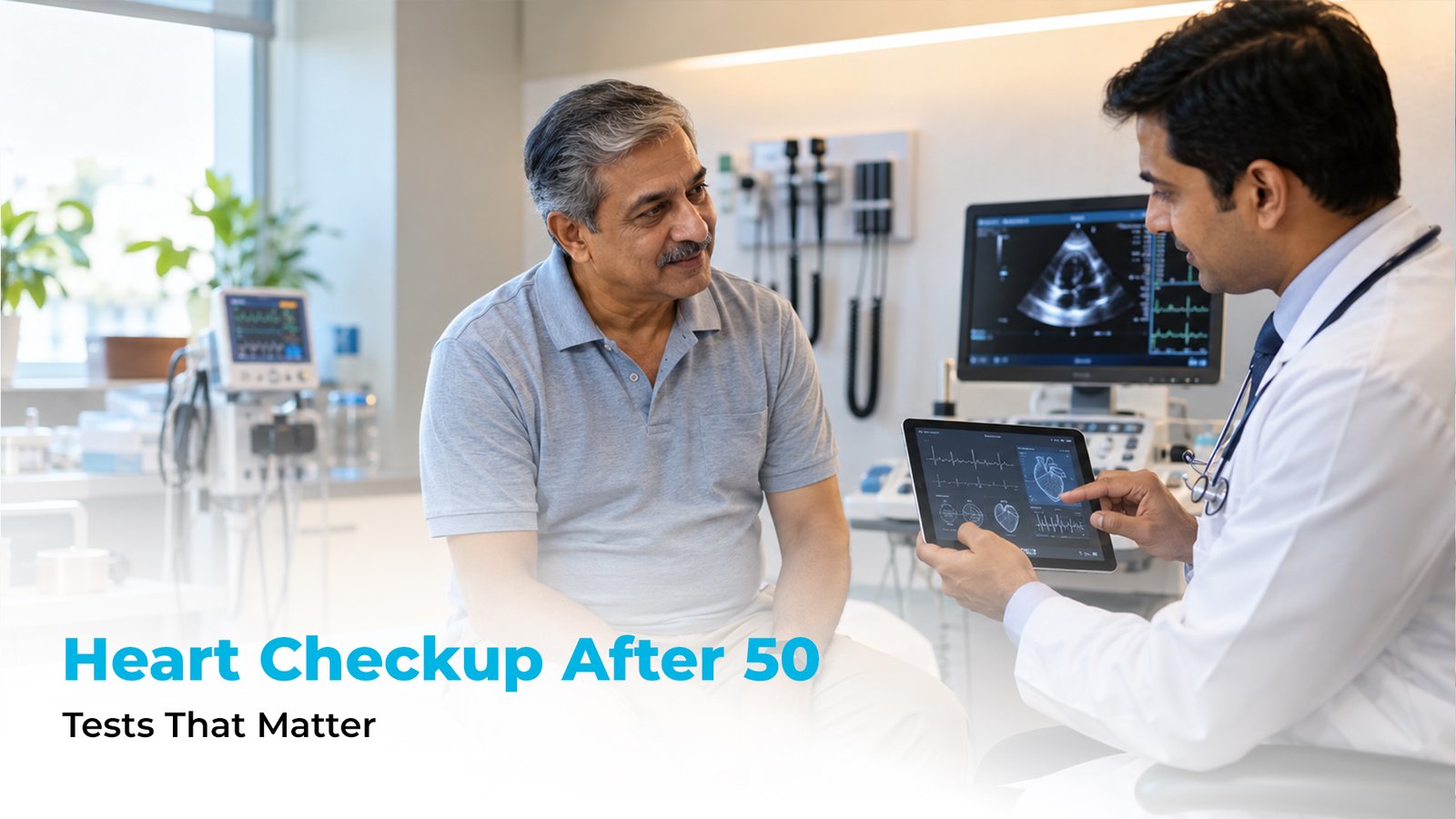
Turning 50 is an important milestone for your overall health. As we get older, the risk of conditions such as high blood pressure, high cholesterol, diabetes and heart disease can increase. Many cardiovascular problems can develop gradually without causing obvious symptoms.
That is why regular heart health checkups after 50 can play an important role in identifying potential risks early.
A heart checkup does not necessarily mean having every possible test. Your doctor can recommend investigations based on your age, medical history, symptoms and risk factors.
Heart disease can sometimes progress silently. A person may feel healthy while having high blood pressure, elevated cholesterol or other cardiovascular risk factors.
Regular health evaluations can help identify these issues and provide an opportunity to manage them through lifestyle changes, medication when appropriate and further medical evaluation.
For adults over 50, routine monitoring becomes particularly important if there is a family history of heart disease, diabetes, high blood pressure, high cholesterol, smoking or excess weight.
High blood pressure is one of the major risk factors for cardiovascular disease. Since it may not cause noticeable symptoms, regular blood pressure measurements are important.
Your doctor may recommend more frequent monitoring if your readings are consistently elevated.
A lipid profile measures different types of cholesterol and triglycerides in the blood.
High levels of certain cholesterol particles can contribute to the buildup of plaque in the arteries. Your doctor can assess your results along with other risk factors to understand your cardiovascular risk.
Diabetes and elevated blood sugar levels can increase the risk of heart disease.
Depending on your health history, your doctor may recommend fasting blood glucose or HbA1c testing to assess blood sugar control.
An ECG records the electrical activity of the heart. It can provide information about heart rhythm and may help doctors identify certain abnormalities.
An ECG may be recommended based on symptoms, medical history and clinical assessment.
An echocardiogram uses ultrasound to create images of the heart.
It can help doctors evaluate the heart’s structure, pumping function and valves. An echocardiogram may be recommended when symptoms or examination findings suggest a need for further evaluation.
For some patients, an exercise stress test may be considered to assess how the heart responds to physical activity.
It may be useful in selected patients who have symptoms or risk factors that require further assessment. Your cardiologist can determine whether this test is appropriate for you.
Not everyone needs advanced cardiac testing as part of a routine checkup.
Depending on your symptoms and risk profile, your cardiologist may recommend additional investigations such as cardiac imaging or other tests.
The important point is that cardiac screening should be personalised rather than based on a one-size-fits-all approach.
Regular checkups are important, but you should not wait for your next scheduled health assessment if you develop concerning symptoms.
Speak to a doctor if you experience:
Sudden or severe chest pain, especially when accompanied by breathlessness, sweating, nausea, fainting or discomfort spreading to the arm, jaw or back, requires urgent medical attention.
Heart health after 50 is not only about medical tests. Everyday habits can make a significant difference to cardiovascular health.
Consider:
If you have an existing heart condition or other health problems, discuss your exercise and lifestyle plans with your doctor.
There is no single schedule that works for everyone.
The frequency of your checkups depends on factors such as your existing health conditions, family history, medications, symptoms and cardiovascular risk.
Some adults may need routine annual health assessments, while others may require more frequent monitoring.
A cardiologist can help create an appropriate screening and follow-up plan based on your individual needs.
Adults looking for a heart health checkup after 50 in Chennai should consider a comprehensive evaluation rather than focusing on a single test.
A cardiologist can review your medical history, assess your cardiovascular risk and recommend the appropriate investigations. Early identification of risk factors can help you take steps to protect your heart before problems become more serious.
Your 50s are an excellent time to become more proactive about cardiovascular health. Regular monitoring of blood pressure, cholesterol, blood sugar and other relevant heart health indicators can help identify potential concerns early.
Remember, not everyone needs the same tests. The right heart health checkup after 50 depends on your individual health profile.
If you are over 50 or have cardiovascular risk factors, speak with a qualified cardiologist about an appropriate heart health screening and follow-up plan.