Physical Address
304 North Cardinal St.
Dorchester Center, MA 02124
Physical Address
304 North Cardinal St.
Dorchester Center, MA 02124
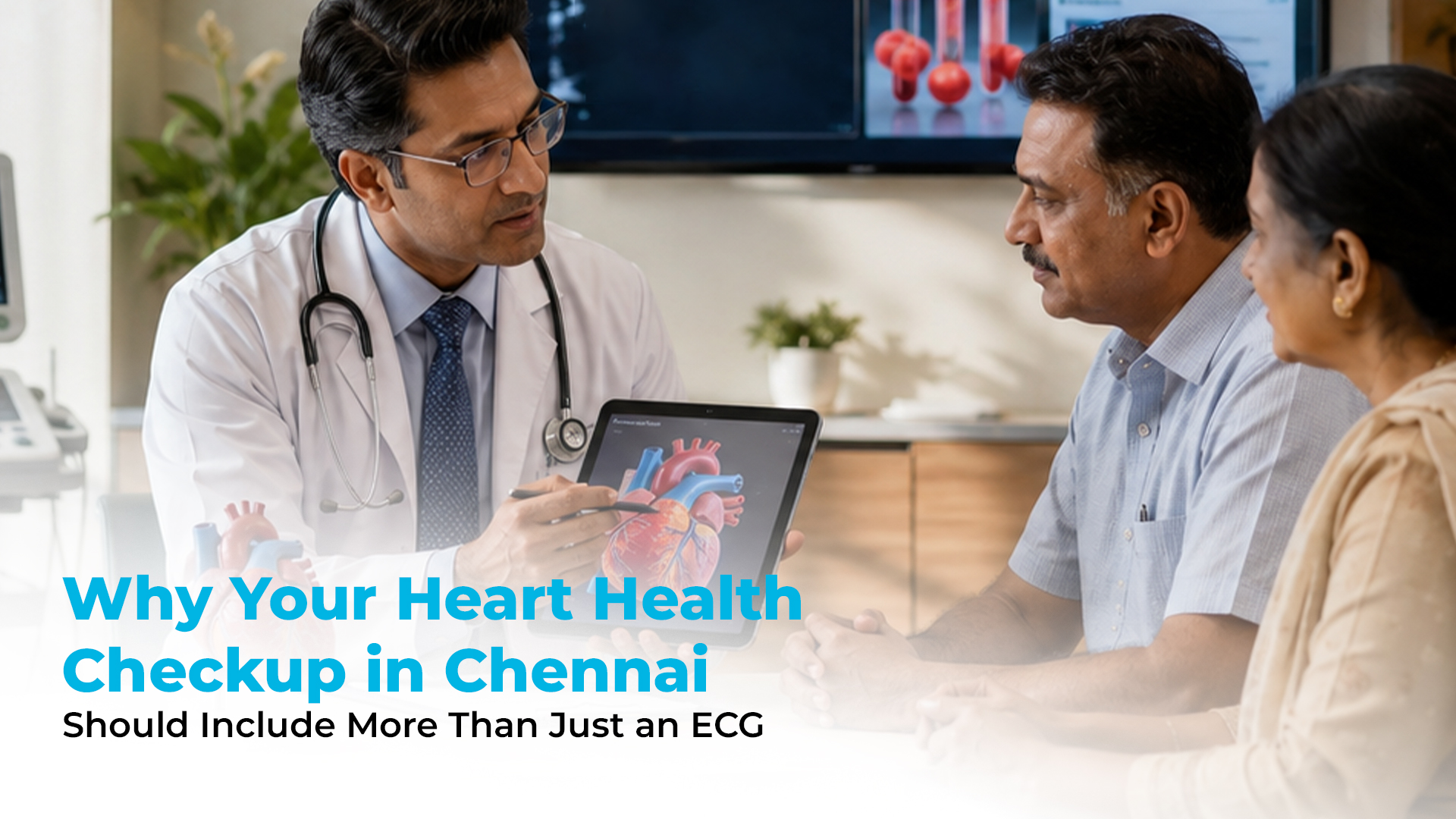
Heart disease often develops silently, showing few or no symptoms until it becomes a serious medical emergency. While many people believe an ECG is enough to assess heart health, it provides only part of the picture. A comprehensive heart evaluation can identify hidden risks early and help prevent future complications.
If you’re considering a heart health checkup in Chennai, it’s important to understand why a complete cardiac assessment goes beyond a simple ECG and how it can protect your long-term health.
An Electrocardiogram (ECG) records the electrical activity of your heart. It helps doctors detect:
An ECG is quick, painless, and an essential part of a cardiac evaluation. However, it has limitations. Many heart conditions—including blocked arteries and early-stage valve diseases—may not appear on a resting ECG.
That’s why cardiologists recommend a more detailed evaluation during a heart health checkup, especially for individuals with risk factors.
A normal ECG does not always mean your heart is completely healthy. Some conditions only become noticeable during exercise or require imaging tests for accurate diagnosis.
For example:
These problems may remain undetected unless additional tests are performed.
A comprehensive cardiac assessment is designed to evaluate your heart from multiple perspectives. Depending on your age, symptoms, and medical history, your cardiologist may recommend:
High blood pressure is often called the “silent killer” because it rarely causes symptoms while gradually damaging the heart and blood vessels.
Regular monitoring helps detect hypertension before complications develop.
Blood investigations help evaluate important heart-related risk factors, including:
These values help determine your overall cardiovascular risk.
An echocardiogram uses ultrasound to create detailed images of the heart.
It helps assess:
Unlike an ECG, this test provides a visual assessment of how the heart is working.
Some heart problems only appear when the heart is working harder.
A treadmill stress test evaluates:
This is especially useful for patients experiencing chest discomfort during physical activity.
High cholesterol and diabetes significantly increase the risk of heart disease.
Early detection allows lifestyle changes and treatment before complications occur.
A quality heart health checkup Chennai also includes discussing:
Understanding these factors helps create a personalized prevention plan.
Many people wait until symptoms appear before seeing a cardiologist. However, preventive screening is often the best approach.
A complete heart evaluation is recommended for:
Even if you feel healthy, regular screening can detect problems early when treatment is most effective.
The biggest advantage of a comprehensive heart health checkup in Chennai is identifying risks before they become life-threatening.
Early diagnosis can help:
Many heart conditions are highly manageable when detected in their early stages.
The frequency depends on your age and health profile.
Generally:
Your doctor will recommend a screening schedule based on your personal risk factors.
Along with regular cardiac evaluations, adopting healthy habits can significantly lower your risk of heart disease.
Simple steps include:
Small lifestyle improvements can make a lasting difference to your heart health.
An ECG is an important diagnostic tool, but it should not be the only test used to evaluate your heart. A comprehensive heart health checkup in Chennai combines clinical examination, blood tests, imaging, and risk assessment to provide a complete understanding of your cardiovascular health.
Whether you’re managing existing risk factors or simply taking a preventive approach, regular heart screenings can help detect problems early, guide timely treatment, and support a healthier future. Investing in a complete heart checkup today is one of the best decisions you can make for your long-term well-being.
If you have high blood pressure, diabetes, a family history of heart disease, or are experiencing symptoms such as chest discomfort, shortness of breath, or palpitations, don’t delay your heart evaluation. Schedule a comprehensive heart health checkup with an experienced cardiologist to assess your cardiovascular risk, detect potential issues early, and receive personalized guidance for maintaining a healthy heart for years to come.