Physical Address
304 North Cardinal St.
Dorchester Center, MA 02124
Physical Address
304 North Cardinal St.
Dorchester Center, MA 02124

It often starts with a small moment. You notice a gap in your smile while brushing, or you hesitate before biting into your favourite food. Losing a tooth is not just about appearance. It can affect how you eat and speak and even how confident you feel around others.
If you are here, you are likely trying to understand your options. When it comes to dental implants vs. dentures, the choice can feel confusing at first. Both are common solutions, but they work in very different ways and suit different needs.
This guide is here to make things simple. By the end, you will have a clear idea of what each option offers and which path might fit your life, comfort, and budget better.
Before comparing them, it helps to first understand what each option really is.
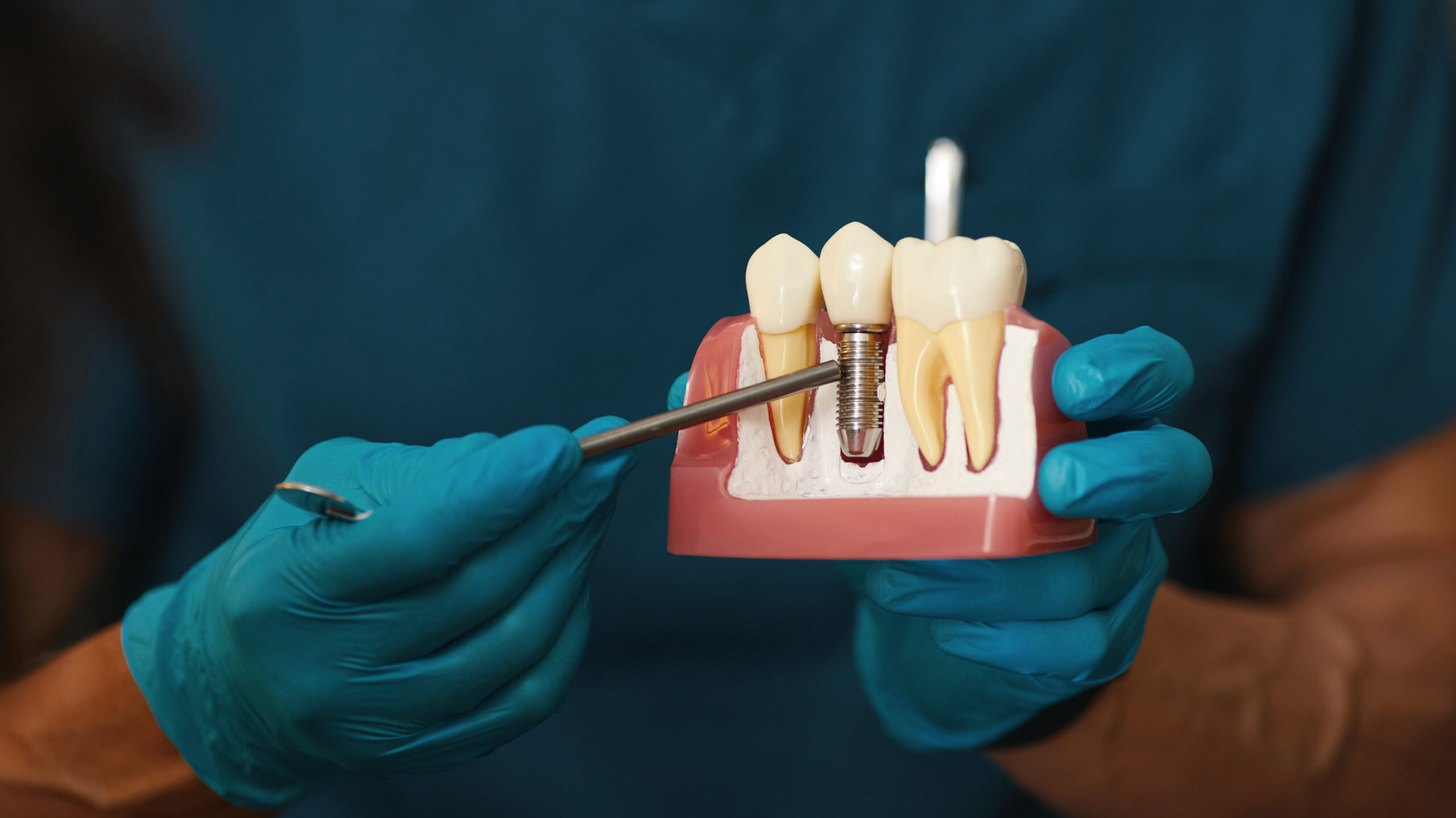
Dental implants are fixed teeth that stay in your mouth like natural ones. A small metal post is placed inside the jawbone, which acts like a tooth root. Once it heals, a crown (the visible tooth part) is placed on top. The result looks and feels very close to a real tooth.
Dentures, on the other hand, are removable teeth. They are designed to sit on your gums and can replace one, several, or all missing teeth. You can take them out for cleaning and while sleeping. They are custom-made to fit your mouth, but they do not attach to the bone like implants do.
In simple terms, implants are fixed and stay in place, while dentures can be removed and worn as needed. Both help restore your smile, but the experience of using them is quite different.
Now that you know what each option is, let’s look at how they feel in real life. This is where the difference becomes clearer.
Dental implants stay fixed in your mouth, so they feel very close to natural teeth. You do not have to think about them once they are placed. Dentures may take time to get used to. Some people feel slight movement or pressure, especially in the beginning.
With implants, you can eat most foods without worry. They stay firm while chewing. Speech also feels natural. Dentures may need a little care. You might avoid very hard or sticky foods, and speaking can feel slightly different until you adjust.
Implants support your jawbone, just like natural tooth roots do. This helps keep the bone strong. Dentures do not support the bone in the same way, so over time, the shape of the gums can slowly change.
Implants can be cared for like normal teeth. Brushing and regular dental visits are enough. Dentures need to be removed and cleaned daily. They also need proper storage when not in use.
Dentures usually cost less at the start, which makes them easier to choose for many people. Implants may cost more in the beginning, but they are long-lasting and may not need frequent changes.
Each option has its place. The right choice depends on what matters more to you in your day-to-day life.
Dental implants are a strong and long-term option, but there are a few things people often learn only after they decide to go ahead.
First, the process takes time. It is not done in a single visit. After placing the implant, your jaw needs time to heal and hold it firmly. This healing can take a few months before the final tooth is fixed.
Second, your jawbone needs to be strong enough to support the implant. If the bone is weak or has reduced over time, your dentist may suggest a small procedure to build it up. This adds a step, but it helps in getting a better result.
You may also feel some mild pain or swelling after the procedure. This is normal and usually settles in a few days with proper care and medicine.
It is also fair to talk about the challenges. Implants cost more than dentures, and the waiting time can test your patience. In rare cases, the implant may not heal as expected, but this is not common when proper care is taken.
Even with these points, many people choose implants because of how natural and stable they feel in the long run. Knowing these details early helps you make a calm and informed decision.
The best choice often depends on your age, health, and what you expect from the treatment. Here’s a simple way to see what might suit you.
If the jawbone has become weak over time, dentures can be a practical option. In some cases, implant-supported dentures may also be suggested for better hold and comfort.
If you are looking for a fixed and long-term solution, dental implants are often a good fit. They stay in place and feel close to natural teeth, which suits an active lifestyle.
Dentures are usually more affordable at the start. They can help restore your smile quickly. Some people choose dentures first and plan for implants later when they are ready.
Certain conditions like uncontrolled diabetes, smoking, or gum problems can affect healing. In such cases, your dentist may guide you on whether implants are safe or suggest dentures as a better option.
If you are planning to get implants in another city or country, make sure the clinic has proper experience and follow-up care. Implants need time and check-ups, so support after the procedure is important.
There is no one-size-fits-all answer. The right option is the one that fits your health, comfort, and daily needs.
Before you make a final choice, it helps to have a clear talk with your dentist. Asking the right questions can remove doubts and help you feel more confident.
Here are some simple questions you can ask:
These questions can give you a better idea of what lies ahead. They also help you and your dentist plan the treatment in a way that suits your needs.
By now, you have a clear picture of both options. The final choice comes down to what matters most in your daily life.
If you want a solution that feels close to natural teeth, stays fixed, and supports your jaw over time, dental implants may be the right choice for you.
If you are looking for a quicker and more affordable way to replace missing teeth, dentures can be a good starting point. They still help you smile, eat, and speak better than before.
If you feel unsure, that is completely normal. A dentist can guide you based on your mouth, health, and comfort level.
There is no single “best” option for everyone. The right choice is the one that fits your needs, your routine, and your future plans. What matters most is that you take the next step with clarity and confidence.
Choosing the right treatment is important, but choosing the right dentist matters just as much. With over 27 years of experience, Dr. Chendrakala Harikrishnan brings deep knowledge and steady care to every patient. Her background includes a BDS, an MFDS, and a fellowship in oral implantology, which adds strong expertise in both dental implants and dentures.
At Shri Krishnasai Clinic in Koyambedu, Chennai, patients are guided with care, not pressure. Whether you are exploring implants or dentures, the focus is on helping you understand your options clearly and choose what feels right for you.
If you are still unsure, a simple consultation can help you move forward with confidence. You can book a dental visit and take the first step toward restoring your smile in a way that suits your comfort and needs.