Physical Address
304 North Cardinal St.
Dorchester Center, MA 02124
Physical Address
304 North Cardinal St.
Dorchester Center, MA 02124
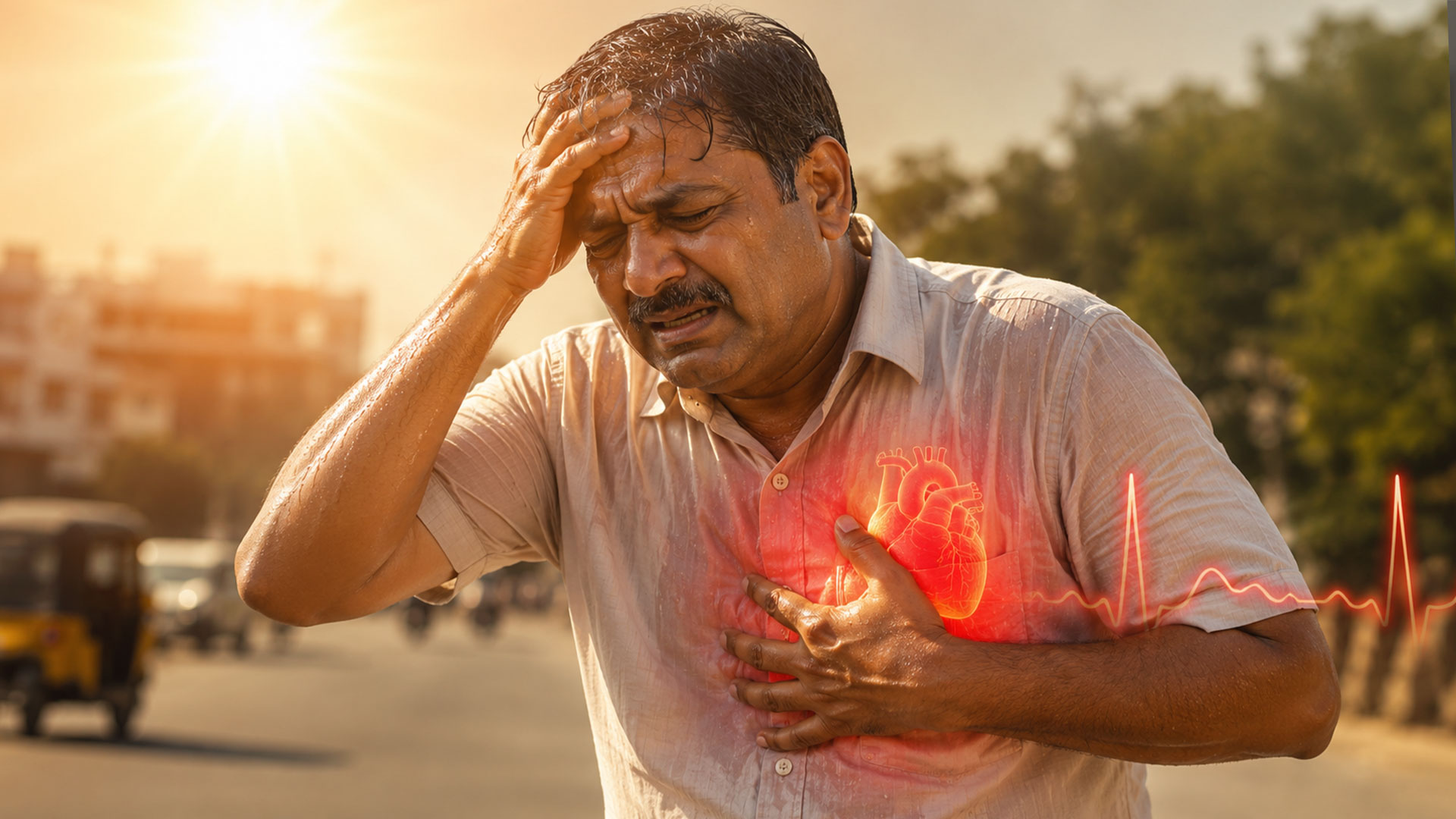
A hot Chennai afternoon can leave anyone feeling drained. An elderly person walking back from the pharmacy may suddenly feel short of breath. A traffic police officer standing under the sun may notice his heartbeat racing faster than usual. Even someone doing normal household work can feel weak and uneasy when the heat becomes too much. This is where many people start asking about summer heat and heart health, because the connection is more serious than it seems.
Yes, hot weather can be bad for your heart.
When the outside temperature rises, your body has to work extra hard to stay cool. That means your heart has to pump faster, move more blood to the skin, and help control body temperature all at the same time. If the heat continues for hours, this extra pressure can become difficult, especially for older adults, outdoor workers, and people who already have heart problems.
Summer does not just make you uncomfortable. In some cases, it quietly pushes your heart into stress without giving a clear warning at first.
In this article, we will look at why this happens, who needs to be more careful, and what simple steps can help protect the heart during the hottest months.
Most people think summer tiredness is just about sweating more. But inside the body, a lot more is happening.
When you are exposed to high heat, your body immediately tries to cool itself down. It does this in two simple ways. First, you start sweating so the body can release heat. Second, the blood vessels near your skin become wider, so more heat can escape from the surface of the body. This sounds normal, but both these actions make the heart work harder.
Because the blood vessels open wider, the heart has to pump faster to keep blood moving properly. That is why some people feel a racing heartbeat or mild palpitations during peak summer. At the same time, sweating causes water loss. If that lost water is not replaced quickly, the blood becomes thicker and harder to circulate. You can think of it like an engine trying to run with less cooling liquid inside it. The machine still runs, but under strain.
This becomes even worse in a city like Chennai, where humidity stays high. In dry weather, sweat dries quickly and cools the body. But in humid weather, sweat stays on the skin longer and cooling becomes slower. That means the body remains hot for a longer time, forcing the heart to continue this extra effort.
This is one reason why heat can also trigger heart flutters, tiredness, or sudden uneasiness even in people who feel otherwise healthy.
Now the important question is, does this affect everyone in the same way? Not really. Some people face a much higher risk than others.
Not everyone reacts to heat in the same way. Some people may feel only mild tiredness, while others can quickly move into a risky condition without noticing it early.
Older adults are one of the most affected groups. As age increases, the body does not adjust to heat as quickly as before. The heart also has less reserve strength, which means even small changes in temperature can make breathing harder, increase weakness, or cause sudden dizziness.
Outdoor workers face another major risk. People who spend long hours on roads, construction sites, markets, or open spaces stay under direct sun for much longer than others. Their body keeps losing water and salt through sweat while the heart continues pumping harder to control the rising body heat. By the afternoon, this can lead to heavy exhaustion and a fast heartbeat.
People who already have heart disease, high blood pressure, or diabetes need to be especially alert. Many of them take medicines that can affect body fluid levels or heart rate. In hot weather, these medicines may make dehydration happen faster or cause blood pressure to drop unexpectedly.
This matters even more in Chennai, where from April to June the heat often feels above 40 degrees because of strong humidity. It is not just hot; it feels heavy on the body.
That is why knowing the warning signs early becomes very important before the heat turns into a medical emergency.
Heat stress does not always arrive all at once. In many cases, the body gives small signals first, then stronger ones if the condition gets worse. Knowing these stages can help you act before it becomes dangerous.
At the beginning, you may notice heavy sweating, unusual tiredness, dry mouth, or a heartbeat that feels slightly faster than normal. Some people also feel restless or uncomfortable without knowing why. These signs are often ignored because they look like simple summer fatigue.
As the body loses more water and the heart keeps working harder, the symptoms become more noticeable. You may feel dizziness while standing, chest tightness, breathlessness during normal walking, or stronger palpitations. This is the stage where the body is clearly struggling to manage the heat.
If you are already taking heart medicines and you notice these moderate symptoms, do not wait for them to settle on their own. Medical advice should be taken quickly.
This is the point where immediate care is needed. Severe chest pain, pain spreading to the arm or jaw, fainting, confusion, or a very rapid, irregular heartbeat should never be treated as “just because of the sun.” These can signal that the heart is under serious stress.
The good news is that many of these problems can be prevented with simple daily habits if you know what to do before stepping into the heat.
The heart handles summer better when the body stays cool, hydrated, and less strained through the day. Small daily changes can make a big difference, especially in Chennai’s heat.
Start with water, but do not wait until you feel very thirsty. Drink water often in small amounts. If you are sweating a lot, coconut water, lemon water with a little salt, or ORS can help replace what your body loses.
Try to avoid outdoor work or walking between 11 in the morning and 4 in the evening. This is usually the hottest part of the day, when body temperature rises very fast. If going out is necessary, take short breaks in shade whenever possible.
Wear loose cotton clothes that allow air to pass easily. Outdoor workers should also keep a towel, cap, or cloth to protect the head and neck from direct heat.
Eat light meals instead of heavy oily food. More fruits, curd, buttermilk, cucumber, watermelon, and less salty food can help the body stay fresh without putting extra load on the heart.
Older adults should avoid going out alone during peak heat. Keeping a charged phone, emergency contact, and drinking water nearby is a smart safety step.
People taking medicines for blood pressure or heart disease should be extra careful with fluid loss and weakness.
Also remember, summer illnesses like dehydration, heat exhaustion, and heat stroke do not just affect energy levels. They can quickly disturb heart rhythm and blood pressure too.
This brings us to one important point many heart patients do not think about enough: the role of regular medicines during summer.
Many people continue their regular heart tablets in summer without realizing that hot weather can change how the body responds to them.
For example, some patients take water tablets to control swelling or blood pressure. These medicines help remove extra fluid from the body. But during summer, when you are already sweating a lot, they can make water loss happen even faster. This may lead to weakness, dryness, low blood pressure, or dizziness.
Some heart patients also take medicines that slow the heartbeat and help the heart work steadily. While these medicines are useful, they can sometimes make it harder for the body to adjust quickly during extreme heat.
Another common issue is a sudden blood pressure drop. A person whose pressure is normally under control may still feel light-headed or tired in summer because heat opens up the blood vessels and reduces pressure further.
This does not mean you should stop or reduce any medicine on your own. That can create bigger problems.
The safer step is to speak with your heart doctor before or during peak summer if you notice more tiredness, repeated dizziness, or unusual sweating. Sometimes even a small medical review can prevent a bigger emergency later.
So how do you know when the body is simply tired from heat and when it is time to actually meet a cardiologist? That is the final thing we need to understand.
Some summer discomfort is common, but certain signs should never be pushed aside as normal heat tiredness. The body may be asking for a proper heart check.
You should plan a cardiac consultation if:
These signs become even more important if you already have heart disease, high blood pressure, or diabetes or if you are above sixty years of age.
Many people wait, thinking they will rest for a day and feel fine. Sometimes that happens. But sometimes hidden heart stress keeps building in the background.
If you are unsure whether the symptom is serious or not, it is always safer to get it checked early than to wait for a bigger issue.
And for people living through Chennai’s intense summer, a simple preventive heart review can offer peace of mind as well as timely protection.
Summer heart stress is often silent in the beginning, which is why timely attention matters so much. A simple check today can help avoid a serious health problem tomorrow.
At Shri Krishnasai Clinic, Koyambedu, Dr. Harikrishnan brings more than 26 years of experience in helping patients manage heart-related risks with confidence. From ECG and echocardiography to Holter monitoring and complete cardiac evaluation, the clinic offers the tests needed to understand how well your heart is handling the summer strain.
Whether you are already a heart patient, caring for an elderly parent, or simply noticing unusual symptoms in the heat, getting a professional opinion early is always a wise step. Book your summer heart consultation and stay one step ahead of hidden cardiac stress. Early care is one of the best gifts you can give your heart.