Physical Address
304 North Cardinal St.
Dorchester Center, MA 02124
Physical Address
304 North Cardinal St.
Dorchester Center, MA 02124

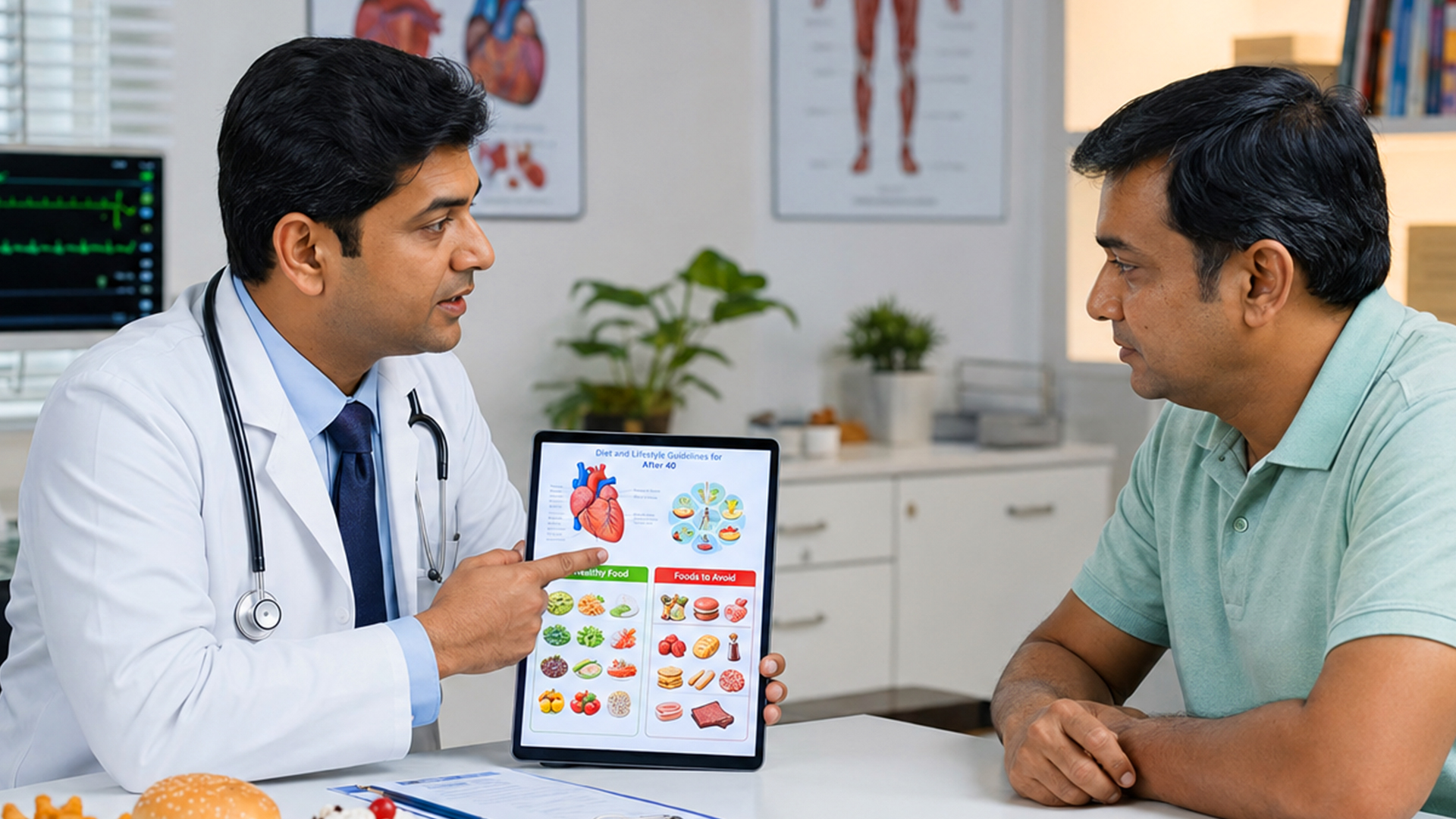
Turning 40 brings changes that most people don’t notice right away. Your body begins to process food differently than it did in your 20s and 30s. Metabolism slows down, blood sugar becomes harder to control, and the body is not as efficient at handling excess salt, sugar, and unhealthy fats.
Because of these changes, foods that once seemed harmless can slowly start affecting your heart health. Extra sugar may raise blood sugar levels for longer periods. Too much salt can push blood pressure higher. Unhealthy fats can gradually build up in the arteries over time.
This doesn’t mean you need to give up South Indian food. Many traditional foods can still be part of a healthy diet. The key is understanding which foods need more attention now and how small changes can make a big difference.
Let’s start with one item that begins the day in most Tamil Nadu homes and look at what it’s really doing to your heart after 40.
For many people in Tamil Nadu, the day starts with a hot cup of filter coffee and a familiar breakfast. These habits feel normal because they have been part of daily life for years. But after 40, even small everyday choices can have a bigger impact on heart health.
A morning without filter coffee is hard to imagine for many households. Some people also enjoy a second or third cup during the day.
The concern is usually not the coffee itself. The real issue is the combination of full-fat milk and sugar, especially when consumed several times a day. After 40, this can lead to repeated rises in blood sugar levels and may increase triglycerides, a type of fat in the blood linked to heart disease.
You don’t have to give up your favourite drink. Try limiting yourself to one cup a day, reducing sugar to half a spoon, and choosing low-fat milk. The taste stays familiar while the strain on your heart becomes lower.
White rice is a staple in most South Indian homes, and many popular breakfast foods such as white idlis, dosas, and puris are made from refined grains.
These foods break down quickly into sugar in the body. Since insulin works less efficiently after 40, blood sugar levels may stay high for longer. Over time, this can affect blood vessels and increase the risk of heart problems.
A practical change is to replace part of your white rice with millets such as thinai, kambu, or kuthiraivali. Brown rice is another good option. There’s no need to change everything at once. Even replacing one meal a day is a positive step.
The morning routine is only one part of the story. The way food is cooked, especially the ingredients used in the kitchen, can have an even bigger effect on your heart health.
The foods on your plate are important, but the way they are prepared can have an equal impact on your heart health. Some common cooking habits found in many South Indian homes can quietly increase the risk of heart disease over time.
Many households reuse oil after frying snacks such as vadai, bajji, or pakoda. The leftover oil may be used again for frying or even added to the next day’s cooking.
The problem is that oil changes when it is heated again and again. Repeated heating creates harmful fats that can increase bad cholesterol and reduce good cholesterol. Over time, this can contribute to the buildup of fatty deposits inside the arteries.
A better option is to avoid reusing oil that has been used for deep frying. For daily cooking, use fresh oil in moderate amounts. Cold-pressed groundnut oil or sesame oil can be good choices when used carefully.
Coconut is a natural part of South Indian cooking. It appears in chutneys, curries, and many traditional dishes. Because of this, people are often confused about whether it is good or bad for the heart.
The truth is that fresh coconut in moderate amounts is usually not the main concern. Problems can arise when large amounts of coconut chutney are eaten every day or when coconut-based dishes become a regular part of every meal. This can increase the amount of saturated fat in the diet.
You don’t need to avoid coconut completely. A small serving of coconut chutney and occasional coconut milk-based dishes can still fit into a balanced diet. The key is moderation, not elimination.
Many popular snacks sold outside the home are prepared using fats that are not ideal for heart health. Items such as parotta, puri, and some bakery products may contain vanaspati or similar fats that can raise the risk of heart disease when eaten often.
This doesn’t mean you can never enjoy your favourite treats. But making home-cooked meals your regular choice and saving fried street foods for occasional treats can make a real difference over time.
The cooking habits in your kitchen matter, but there is another source of risk that often goes unnoticed. It may be sitting on your dining table at almost every meal.
When people think about heart health, they usually focus on oily foods, sweets, or large meals. But one of the biggest hidden problems in the South Indian diet is often found in the side dishes served with every meal.
A typical meal may include a spoon of pickle, an appalam, and a glass of buttermilk. Each item may seem harmless on its own. The problem begins when these foods are eaten regularly, meal after meal, day after day.
Pickles such as mango pickle or lime pickle are packed with flavour, but they are also high in salt. In fact, just one teaspoon of pickle can contain a large amount of sodium. When combined with salted buttermilk and appalam, the total salt intake can quickly add up.
After 40, the body becomes less efficient at handling excess sodium. Too much salt can raise blood pressure, and high blood pressure is one of the leading causes of heart disease.
The good news is that you do not need to stop eating your favourite side dishes. A few simple changes can help reduce the strain on your heart.
Limit pickle to a small serving instead of taking extra helpings. Choose roasted appalam instead of fried. If you enjoy buttermilk, try making it with little or no added salt.
These small adjustments allow you to enjoy the same flavours while lowering your daily salt intake.
The side dishes on your plate matter, but the biggest challenge for many people comes later in the day. For most adults, the evening is when unhealthy food choices quietly begin to add up.
For many people, the evening is the hardest time of the day when it comes to healthy eating. Work comes to an end, household tasks slow down, and it’s time to relax with a cup of tea or coffee. That’s when the snacks appear.
A handful of mixture, a few murukkus, a bakery bun, a puff pastry, or some biscuits may not seem like much. But these small choices can add a large amount of unhealthy fat, refined carbohydrates, and salt to your daily diet.
Many popular evening snacks are deep-fried and often prepared using refined oils. In some cases, the oil may have been heated multiple times. Snacks such as mixture and murukku are also usually made with refined flour or finely processed rice flour.
Bakery items such as puffs and pastries bring another concern. They are often made with fats that can increase bad cholesterol when eaten regularly.
After 40, the body is less efficient at handling large amounts of refined carbohydrates and unhealthy fats. Since physical activity is usually lower in the evening, these foods are more likely to contribute to weight gain, higher triglycerides, and poor blood sugar control.
The goal is not to stop enjoying snacks altogether. It’s about choosing options that satisfy hunger without putting extra pressure on your heart.
Roasted groundnuts, boiled sundal, a small bowl of poha, or fresh fruit are simple alternatives that provide more nutrition and keep you full for longer.
You don’t have to give up murukku forever. The key is to avoid turning it into an everyday habit.
By now, we’ve looked at several foods that may quietly affect heart health after 40. But a heart-friendly diet is not only about what to eat less of. It’s also about knowing which traditional South Indian foods deserve a bigger place on your plate.
After reading about foods that may increase heart risks, it’s easy to focus only on what needs to be reduced. But heart health is not just about avoiding certain foods. It’s also about choosing more of the foods that naturally support a healthy heart.
The good news is that many heart-friendly foods have been part of traditional South Indian cooking for generations.
Long before white rice became the main staple, millets were a regular part of the South Indian diet. Varieties such as thinai, kambu, kuthiraivali, and ragi are rich in fibre and help keep blood sugar levels more stable.
They can also support healthy cholesterol levels and keep you feeling full for longer. Adding millet-based meals a few times a week is not following a new health trend. It is simply returning to a traditional way of eating.
Drumstick and drumstick leaves are commonly available and highly nutritious. They contain important nutrients that help support heart health and overall well-being.
Adding them to sambar, poriyal, or other home-cooked dishes is an easy way to increase the nutritional value of your meals.
Many people are surprised to learn that simple dishes like sambar and rasam can fit well into a heart-friendly diet.
Made with tamarind, spices, and lentils, these traditional foods provide flavour without relying on unhealthy fats. Rasam, in particular, can be a light and satisfying addition to meals when prepared with moderate amounts of salt.
Curd is another simple food that deserves a place on your plate. It provides protein and supports good digestion.
Instead of reaching for extra pickle or another fried side dish, a serving of low-fat curd can be a healthier companion to rice-based meals.
For people who eat non-vegetarian foods, fish is one of the best choices for heart health. Sardines, mackerel, and pomfret are widely available along the Tamil Nadu coast and contain healthy fats that support the heart.
Even two servings a week can be a valuable addition to a balanced diet.
The best part is that none of these foods are difficult to find or prepare. They are already familiar to most South Indian households. The real challenge is making small, steady changes that fit naturally into everyday life.
When it comes to heart health, many people think they need a completely new diet. In reality, lasting results usually come from small changes that are easy to follow every day.
One simple approach is to use what can be called the “Rule of Quarters.”
At each meal, take a moment to look at your plate and ask yourself three questions:
Can one quarter of my plate be vegetables or greens?
Can I reduce the fried or highly processed foods by one quarter?
Can I replace one item with a healthier option, such as millet instead of extra white rice or sundal instead of a fried snack?
These changes may seem small, but they add up over time. A few better choices each day can help improve cholesterol levels, blood pressure, and blood sugar. In many cases, the difference becomes visible during a routine health check-up within a few months.
The most important thing to remember is this: your traditional South Indian diet is not the problem. The real issue is often the portion size, how often certain foods are eaten, and a few everyday habits that have slowly become routine.
Change those small things, and you may be surprised by how much better your heart health can become.
Healthy food choices can make a real difference, but they work best when you know where your heart health stands today. If you’re over 40 and haven’t had a recent check-up, it may be a good time to check important numbers such as your cholesterol levels, blood pressure, and heart rhythm.
At Shri Krishnasai Clinic, Koyambedu, Dr. Harikrishnan helps patients understand their heart health and take simple steps to reduce future risks. A timely consultation can help you make informed decisions about your diet, lifestyle, and long-term well-being.
You can book a consultation to learn more about your heart health and the changes that may benefit you most.