Physical Address
304 North Cardinal St.
Dorchester Center, MA 02124
Physical Address
304 North Cardinal St.
Dorchester Center, MA 02124
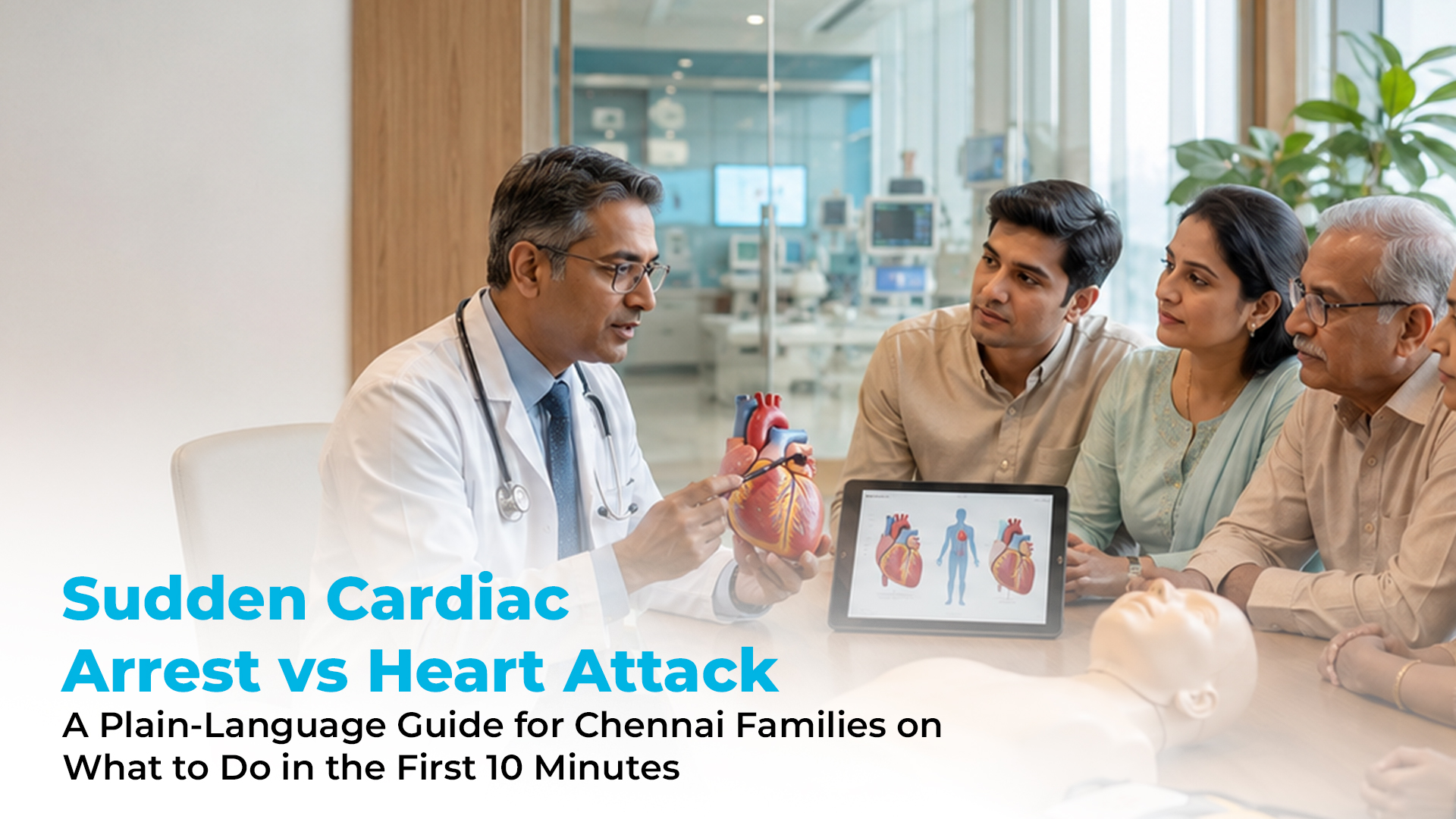
Heart emergencies can happen without warning, and knowing how to respond can make the difference between life and death. Many people use the terms ‘heart attack’ and ‘sudden cardiac arrest’ interchangeably, but they are not the same condition. Understanding the difference—and knowing sudden cardiac arrest first aid—can help you act quickly and confidently during a medical emergency.
This guide explains the key differences between a heart attack and sudden cardiac arrest, what to watch for, and the critical steps to take during the first 10 minutes.
Although both conditions affect the heart, they occur for different reasons.
A heart attack happens when blood flow to a part of the heart muscle is blocked, usually due to a clogged coronary artery. Without enough oxygen-rich blood, part of the heart muscle begins to die.
A person having a heart attack is usually awake and breathing, although they may be in severe discomfort.
Sudden cardiac arrest occurs when the heart suddenly stops beating effectively because of a serious electrical problem. Blood flow to the brain and other vital organs stops immediately.
The person:
Without immediate sudden cardiac arrest first aid, survival chances decrease significantly with every passing minute.
Recognising a heart attack early can help prevent it from progressing to cardiac arrest.
Symptoms may include:
Some elderly patients, women, and people with diabetes may experience only mild or unusual symptoms.
Sudden cardiac arrest usually happens without much warning.
Watch for these signs:
Immediate action is essential.
Knowing sudden cardiac arrest first aid can save a life before emergency medical services arrive.
Gently tap the person’s shoulders and ask loudly if they are okay.
If there is no response, act immediately.
Call your local emergency ambulance service immediately or ask someone nearby to make the call.
Provide:
Do not delay calling for professional medical help.
If the person is not breathing normally:
Continuous chest compressions help circulate blood to the brain and heart until advanced care arrives.
An Automated External Defibrillator (AED) can restore a normal heart rhythm in certain cases of sudden cardiac arrest.
If one is nearby:
AEDs are designed for public use and guide users through every step.
Continue CPR until:
Every minute counts during sudden cardiac arrest.
Yes.
Although many heart attacks do not cause cardiac arrest, a severe heart attack can trigger dangerous electrical disturbances that suddenly stop the heart.
This is why prompt medical treatment for heart attack symptoms is so important.
Several factors increase the likelihood of heart emergencies, including:
Regular health checkups and lifestyle modifications can help reduce these risks.
Being prepared before an emergency occurs can improve survival.
Consider these simple steps:
Prepared families are better equipped to respond quickly during a crisis.
While not all heart emergencies can be prevented, healthy habits greatly reduce the risk.
Maintain heart health by:
Early diagnosis and proper management of heart conditions can prevent many life-threatening complications.
Understanding the difference between a heart attack and sudden cardiac arrest is essential for every family. A heart attack is caused by blocked blood flow, while sudden cardiac arrest is an electrical failure that stops the heart from pumping blood. Knowing sudden cardiac arrest first aid, recognising the warning signs, calling emergency medical services immediately, starting CPR, and using an AED when available can dramatically improve the chances of survival.
In a cardiac emergency, every second matters. Learning these simple but life-saving steps today could help you protect the life of someone you love tomorrow.
If you or a family member has a history of heart disease, unexplained fainting, irregular heartbeat, or other cardiac symptoms, don’t wait for an emergency to occur. Consult an experienced cardiologist for a comprehensive heart evaluation and personalised treatment plan. Early diagnosis, timely intervention, and regular heart check-ups can significantly reduce the risk of serious cardiac events and help you maintain a healthier, more active life.